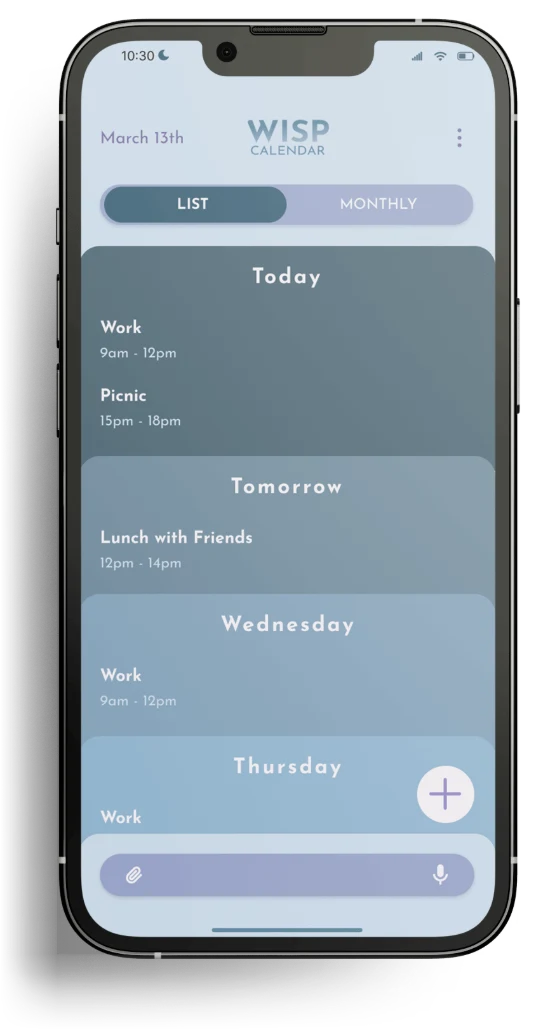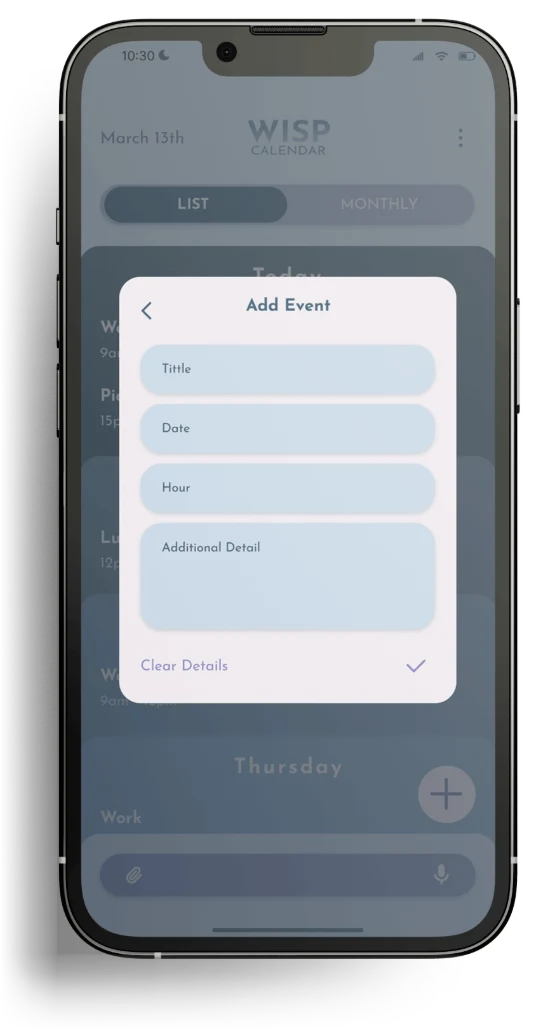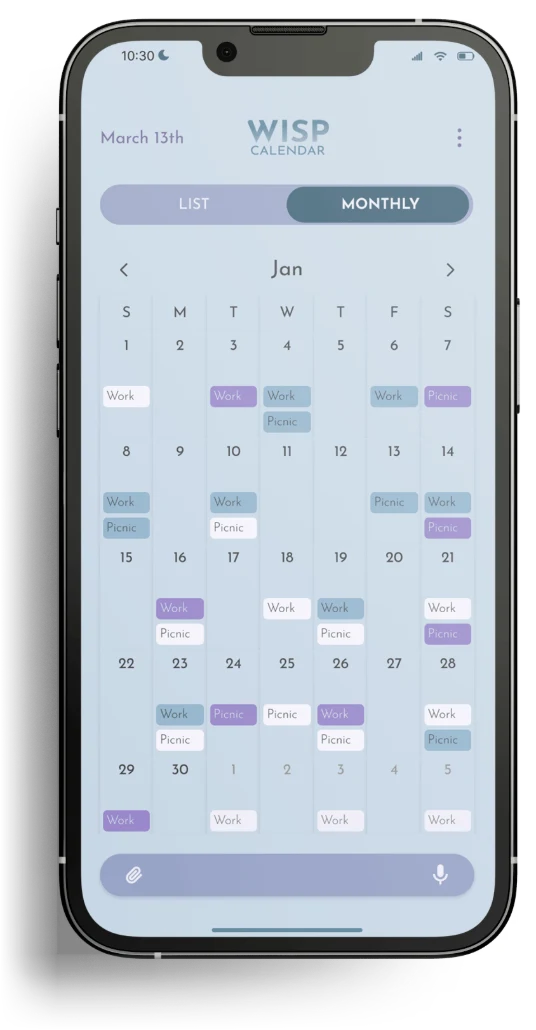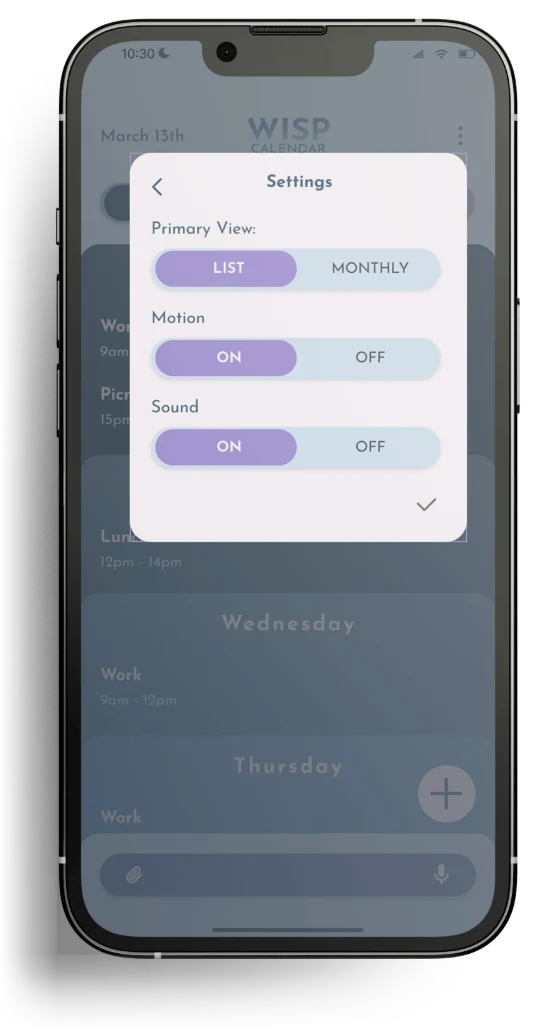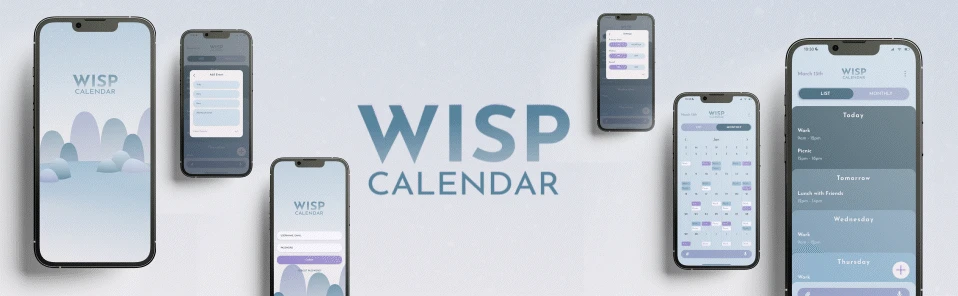
Animated Wisp Calendar banner

Wisp Calendar. Your Minimalist Organizer

An AI-adaptive cognitive calendar that utilizes Inclusive Design principles to reduce friction for users.

🏭 Industry: Organizer / Productivity
πŸ“± Platform: Mobile App
βŒ› Project Type: Case Study / Concept Project
πŸ‘©πŸΌβ€πŸ’» Role: UX/UI Designer (end-to-end)
πŸ›  Tools: Figma, Adobe Photoshop


Desk Research

Modern digital calendars often impose a heavy cognitive tax, requiring manual data entry and complex navigation. For many users, time feels abstract and "not now" tasks are easily forgotten until they become stressful emergencies. Current interfaces lack the emotional feedback necessary to make time management feel rewarding, often leading to "calendar fatigue" and missed commitments.

Sources: fabricofchange.com rollingstone.com researchgate.net

Hypothesis Statement: If we build a tool that keeps things simple and visible, we can help users stop feeling overwhelmed by their schedule.

By letting AI handle the busywork of saving appointments and by giving users a small satisfying moment of feedback every time they complete something we can turn their calendar from a source of stress into something that actually feels good to use.

🎯 Goal: To create a dopamine-positive interface that makes time management feel successful and satisfying. The goal is to close the gap between what users intend to do and what they actually get done, by giving them a quiet, structured system.

Section Detail
Wisp research details

Target Audience

Individuals who experience cognitive overload from traditional productivity tools. This includes:


Ideation

Existing wardrobe and fashion-related apps were analyzed to identify common patterns, recurring usability issues, and opportunities for improvement within the market.

This research went beyond surface-level feature comparison. By evaluating both app structures and user flows, as well as App Store reviews, it was possible to understand which features users truly value β€” and which ones create friction or frustration.

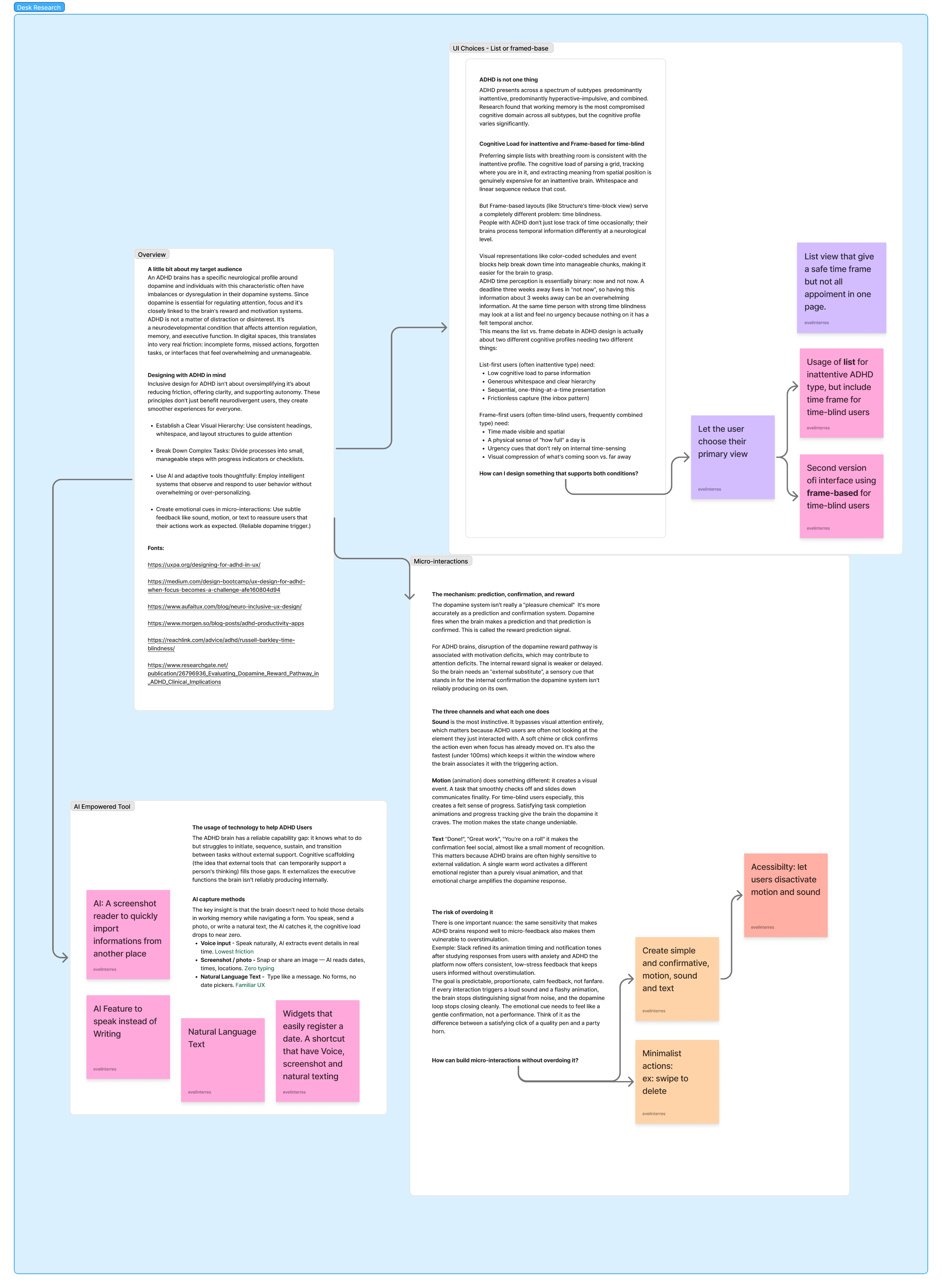
Wisp ideation board with ten sticky notes: list and frame-based views for time-blind users, simple confirmations with motion, sound and text, letting users pick their main view and turn off motion and sound, widgets, natural language input, and AI features for voice and screenshots
Section Detail

Designing with ADHD in mind

ADHD brains have a specific neurological profile around dopamine and individuals with this characteristic often have imbalances or dysregulation in their dopamine systems which is essential for regulating attention.

Inclusive design for ADHD isn’t about oversimplifying; it’s about reducing friction and offering clarity. These principles don’t just benefit neurodivergent users, they create smoother experiences for everyone.

1. Inattentive profile and Time-blind users

Inattentive Profile: Preferring simple lists with breathing room is consistent with the inattentive profile. The cognitive load of parsing a grid, tracking where you are in it, and extracting meaning from spatial position is genuinely expensive for an inattentive brain.

Time-blind problem: Frame-based layouts (like Structure's time-block view) serve as a time tracker.

People with ADHD don't just lose track of time occasionally; their brains process temporal information differently at a neurological level.

How can I design something that supports both conditions?
2. Micro-interactions: prediction, confirmation, and reward

For ADHD brains, the internal reward signal is weaker or delayed. So the brain needs an external substitute for the internal confirmation of the dopamine system.

The risk of overdoing it is that the same sensitivity that makes ADHD brains respond well to micro-feedback also makes them vulnerable to overstimulation.

How can I build micro-interactions without overdoing it?


Moodboard

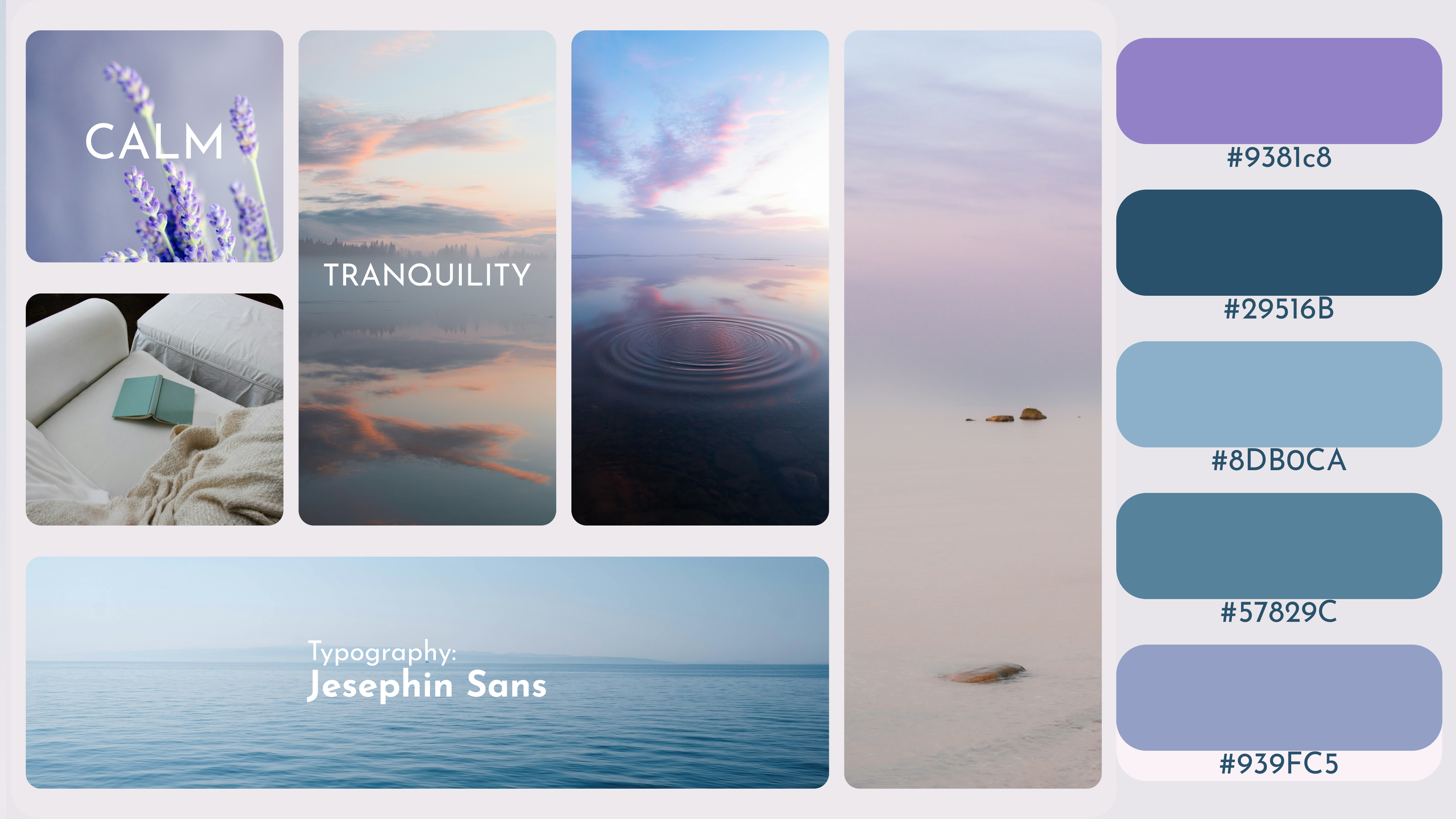
Wisp moodboard

Wireframe

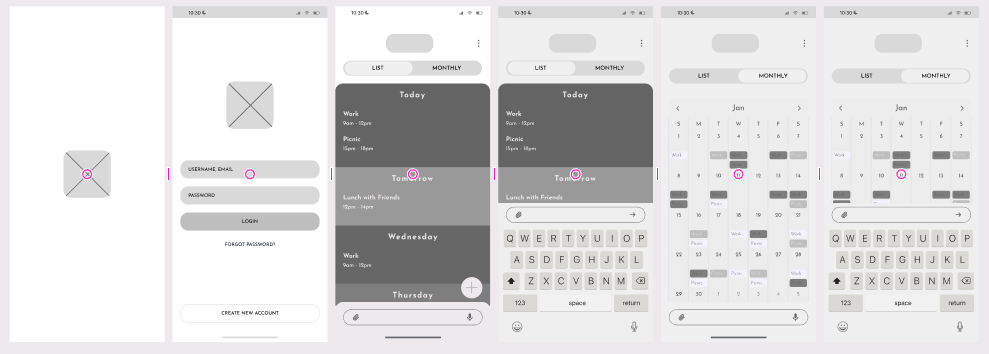
Wisp wireframes

Final Design

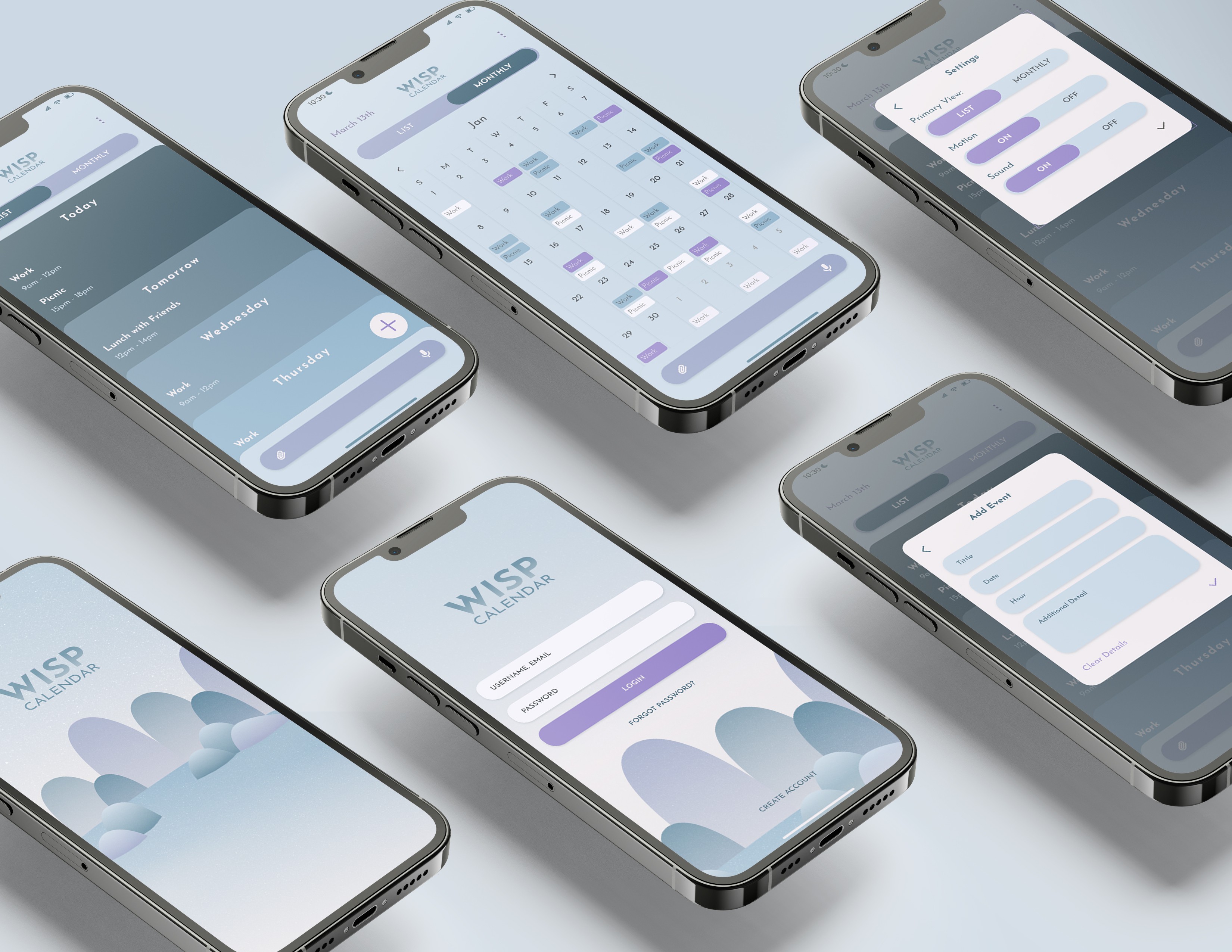
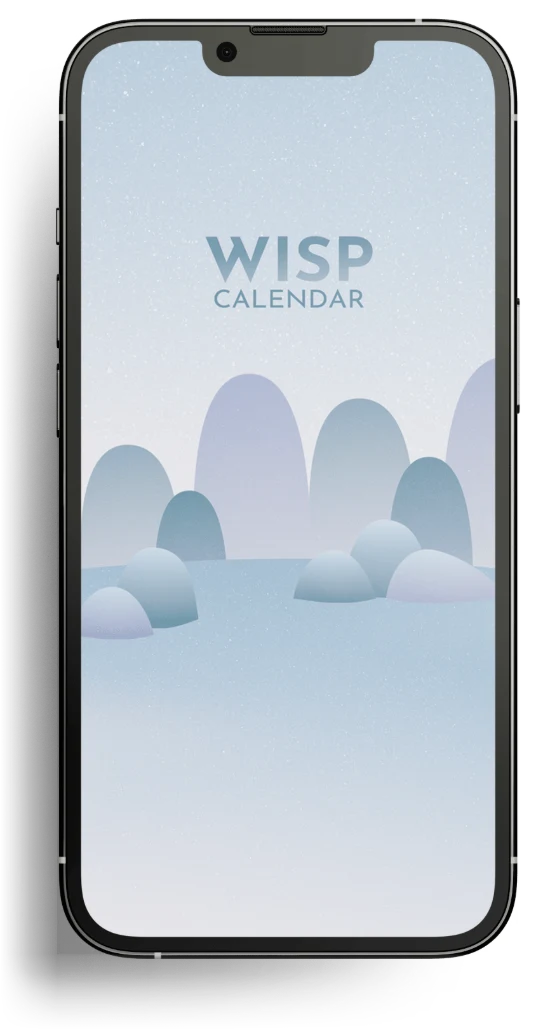
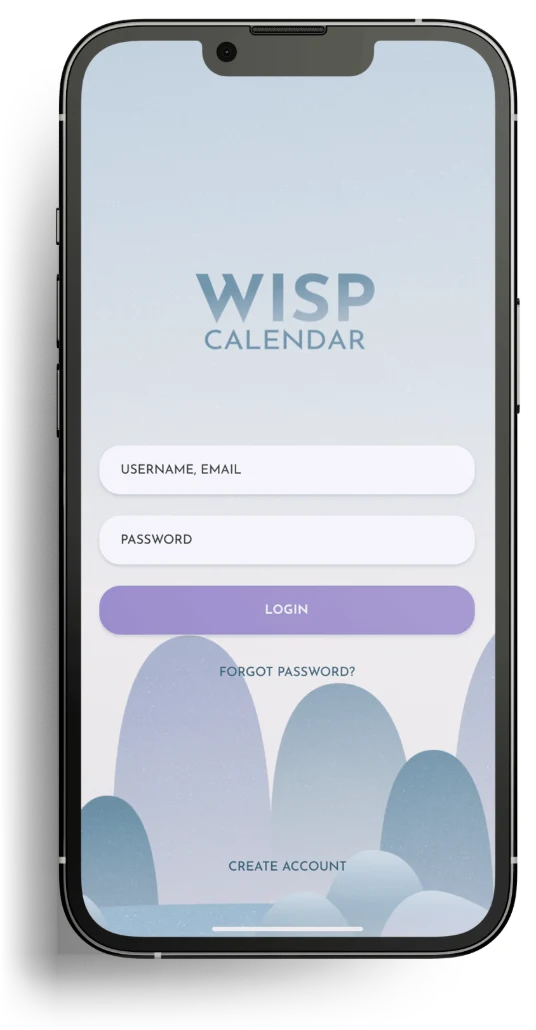
Wisp Calendar final design mockup
Wisp mockup Wisp mockup Wisp mockup Wisp mockup Wisp mockup Wisp mockup

Back To Top